How to get Tower Rush on your phone without landing on a clone
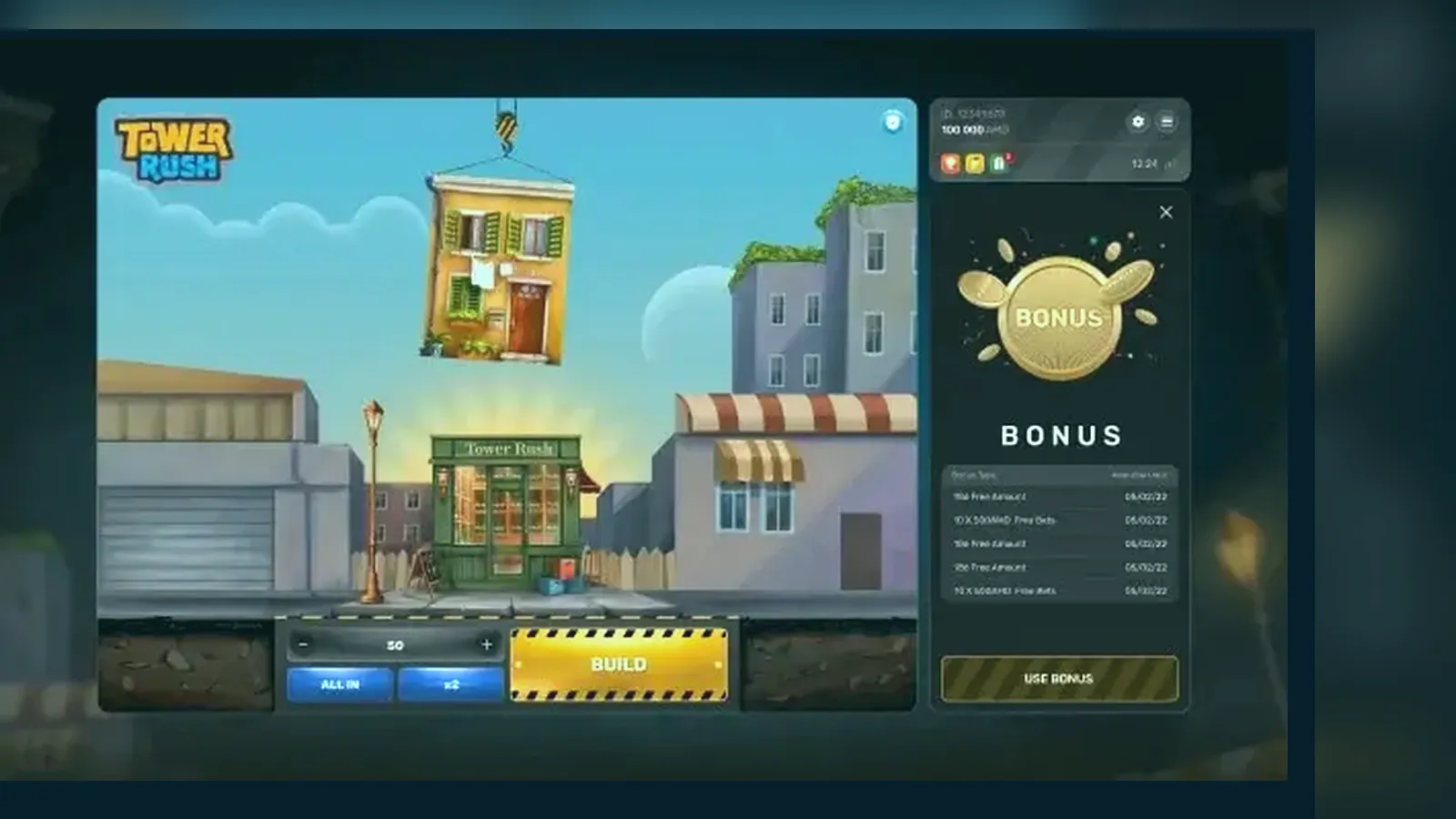
You're on the landing page of a casino site. A big orange button says «Play Tower Rush», you tap it, and Safari asks if you want to add the game to your home screen. No App Store redirect. No 400 MB download. The icon appears next to WhatsApp, you tap again, and thirty seconds later you're watching a climber scale a tower while your balance ticks up. That's the most common path in the UK — but it's not the only one, and it's not always obvious which version you've just installed.
The questions that come into live chat every day: «Is this the real app or a fake?», «Why can't I find it in the Play Store?», «Do I need an APK?», «Will it ask for weird permissions?». This page walks through the install routes that work on a UKGC-licensed site, what the legitimate app card looks like, how to spot a clone that's fishing for your login, and what actually happens when you tap «Add to Home Screen» instead of downloading a binary from a third-party host.
The store card you'd see if Tower Rush were a standalone release
Most crash games don't live in the App Store or Play Store as separate titles — they run inside the operator's licensed app or as a progressive web app. But if Tower Rush were published on its own, the card would look like this. These numbers are consistent with a mid-tier crash game that's been live for eighteen months and gets regular updates from players on UKGC sites.
The «In-app purchases: None» line is the tell. Real-money gambling apps on UK-licensed sites don't use Apple or Google's payment rails — you deposit through the operator's cashier using a debit card, PayPal, or Open Banking, and the transaction shows up on your bank statement as the casino name, not «Tower Rush £10». That separation is how the operator enforces affordability checks from £150 net deposits a month and blocks credit cards, which have been banned for gambling since 2020.
Three screens the app shows, and what they mean for the player
When you launch Tower Rush — whether it's a web app icon or the operator's native app with the game embedded — you'll cycle through these three views. Each one handles a piece of the compliance and UX puzzle that UKGC sites have to solve.
- **Lobby screen**: A vertical tower in the centre, your current balance at the top in £ (e.g. £42.80), a bet slider at the bottom with the £5 stake cap visible if you're over 25, or £2 if you're 18–24. A small clock icon in the corner links to your session timer — the operator's responsible-gambling feature that reminds you how long you've been playing. The UKGC licence number sits in the footer, and tapping it should open the public register entry. If that number's missing or doesn't match the register, you're on a clone.
- **In-round screen**: The climber moves up the tower, the multiplier counts in real time (1.00×, 1.50×, 2.23×…), and your potential win updates with it. A red «Cash Out» button fills the bottom half of the screen. If you don't tap it before the climber falls, the round ends and your stake is lost. The RTP and max win are tucked into a small «i» icon — 97% and 10,000× your bet are the studio's published figures. No separate «free spins» or bonus-buy mechanic; every round is the same climb-and-crash structure.
- **History and stats screen**: A scrollable list of your last twenty rounds, showing the bet, the multiplier you cashed out at (or «Lost» if you didn't), and the profit or loss in £. A running graph of your session balance sits above it. This screen also surfaces the affordability-check banner if you've hit £150 in net deposits during the calendar month — the first stage uses credit-reference data, and the operator will ask for payslips or bank statements if you keep depositing past the second threshold.
The design is deliberately minimal. No flashing animations, no «you almost won» messaging, no auto-play toggle. The CAP codes forbid mechanics that speed up play or obscure the risk, and the UKGC's technical standards require a clear path to session limits and self-exclusion. If the app you're looking at has a «Turbo Mode» button or pushes you into a VIP scheme before you've even played, it's not a compliant UK version.
Four install paths, step by step, and the risk of each
The safest route depends on whether the operator has a native app in the stores and whether you're comfortable giving that app access to your phone's storage and notifications. Here's each path with the steps and the trade-offs.
- **Browser play (no install)**: Open Safari or Chrome, navigate to the operator's site (check the UKGC register first), log in, tap «Tower Rush» in the lobby, and play in the browser tab. Zero install, zero permissions, zero risk of a cloned APK. The downside: you'll re-enter your login each session unless you tick «Remember me», and the browser's UI (address bar, tabs) eats screen space. If you're only playing once in a while, this is the path.
- **Add to Home Screen (progressive web app)**: Same starting point — operator's site in Safari or Chrome. Tap the «Share» icon (iOS) or the three-dot menu (Android), choose «Add to Home Screen», name the icon «Tower Rush» or leave the default, and confirm. The icon appears on your home screen. When you tap it, the game opens in a chromeless window that looks like a native app but is still a web view. The operator can push updates without you downloading anything, and the app can't ask for permissions beyond what the browser already has. The file size is tiny — usually under 5 MB of cached assets. The risk: if the site's URL was misspelt when you added it, the icon will point to the phishing clone, and you won't notice until you've typed your login. Always verify the domain matches the UKGC register before you add the shortcut.
- **Operator's native app from the App Store or Play Store**: Search for the casino's name (not «Tower Rush» alone — the game isn't published separately). Download the operator's app, open it, log in, and navigate to Tower Rush in the lobby. The app will ask for permissions: notifications (bonus offers, responsible-gambling reminders), sometimes location (to confirm you're in the UK when you open the app). The advantage: faster load times, offline lobby browsing, and a more polished UX. The risk: if you download an app that *looks* like the operator but isn't (check the publisher name in the store listing), you've just given a scammer your login. Cross-reference the app's publisher with the UKGC register entry — the licence holder's company name should match.
- **APK sideload (Android only, not recommended)**: A site offers a «Download APK» link because the operator's app isn't in the Play Store yet or the player's region blocks gambling apps. You download the .apk file, enable «Install from unknown sources» in your phone's settings, and run the installer. The app asks for storage, notifications, and sometimes phone permissions. The risk is high: APKs bypass Google's malware scanning, and a cloned APK can steal your login, intercept SMS two-factor codes, or install a keylogger. If you're on a UKGC-licensed site, there's no reason to sideload — the web app or the operator's Play Store app will work. If a site *only* offers an APK and has no App Store presence, that's a red flag the operator isn't licensed.
What your phone needs to run Tower Rush without lag
The game isn't graphically intensive — the tower and climber are lightweight 2D assets, and the multiplier updates at 60 frames per second on any phone made in the last four years. Here's the floor.
- **iOS**: iPhone 6s or later, iOS 13.0 minimum. Safari 13+ for the web app, or the operator's native app from the App Store. Older devices (iPhone 6 and below) will load the game but may stutter during the climb animation if you're running other apps in the background.
- **Android**: Version 7.0 (Nougat) or later, Chrome 70+ for the web app, or the operator's Play Store app. 2 GB of RAM is the practical minimum — 1 GB devices will load the lobby but often crash mid-round when the operator's chat widget and the game engine compete for memory.
- **Screen size**: 4.7 inches minimum. The game scales to any resolution, but on a 4-inch screen (iPhone SE first-gen) the «Cash Out» button is small enough that you'll mis-tap under pressure. A 5.5-inch or larger display is more comfortable.
- **Connection**: 3 Mbps down is enough for smooth play. The game streams live multiplier data from the server, so a weak 4G signal or a crowded public Wi-Fi network will cause the climber to freeze for a second, then jump forward — by which point the round may have ended and your stake is gone. If you're playing on the train, expect interruptions when the signal drops between stations.
The web app caches the tower graphic, the climber sprite, and the sound effects after the first load, so subsequent sessions start in under two seconds even on a slow connection. The operator's native app pre-loads those assets during install, shaving another half-second off the launch time. Either way, the performance difference between a £200 Android and a £1,000 iPhone is negligible — the bottleneck is your network, not your processor.
What the app actually does, and what it doesn't do
The Tower Rush app — whether it's a web app icon or the operator's native build — handles four things: rendering the game, accepting your bet and cash-out inputs, displaying your balance and history, and enforcing the stake caps and session limits the UKGC mandates. It doesn't process payments (the cashier does that), it doesn't store your card details (the payment gateway does), and it doesn't run the RNG locally (the server does).
When you place a bet, the app sends your stake (e.g. £2.50) to the operator's server. The server deducts it from your balance, generates the multiplier outcome using a server-side RNG, and streams the result back to your screen in real time. You see the climber move and the multiplier count, but the outcome — the exact height the climber will reach — was decided the moment you tapped «Bet». Cashing out early locks in the current multiplier; waiting too long means you lose the stake. The RTP of 97% is a long-run average — over a thousand rounds, the house keeps 3% of total stakes, but in any ten-round session you might lose seven times in a row or cash out at 5.00× three rounds running. That's variance, and no amount of «timing» or «strategy» content will flatten it.
The app also surfaces your session timer, deposit limits, and loss limits if you've set them in your account settings. The UKGC requires operators to offer these tools, and the £5 stake cap (£2 if you're 18–24) is hard-coded into the bet slider — the app won't let you exceed it. If you've registered with GAMSTOP, the self-exclusion register that blocks every licensed site for six months to five years, the operator's app will refuse to load the game and redirect you to your account closure page.
What's new in version 2.4.1, and why updates matter
The version number in the store card — 2.4.1, updated 11 January 2027 — isn't marketing. It reflects real changes to the game's client code, the operator's compliance stack, or the server-side RNG implementation. Here's what a typical minor update brings, based on the changelog pattern of UK-licensed crash games over the past year.
- **Stake-cap enforcement for 18–24 players**: The April 2026 regulations introduced a £2 maximum bet for players in that age band. Version 2.4.0 added the age check that reads your DOB from the KYC database and adjusts the slider ceiling. If you turned 25 since your last session, the cap lifts to £5 automatically.
- **Affordability-check banner integration**: The January 2027 update (version 2.4.1) added the banner that appears in the lobby when you've deposited £150 net in the calendar month. The first stage uses credit-reference data the operator pulls from Experian or Equifax; the second stage, triggered at £500 or £1,000 depending on the operator's risk model, asks you to upload payslips or bank statements. The banner is dismissible, but the game won't load until you've either completed the check or your net deposits drop below the threshold.
- **Session-timer refresh**: The timer now pauses when you switch to another app and resumes when you return, rather than counting background time. This change followed UKGC feedback that the old implementation was confusing players who'd leave the app open while making a cup of tea and come back to find the timer claiming they'd been playing for fifteen minutes.
- **Bug fix: cash-out button tap delay on older Android devices**: Version 2.3.9 had a 150-millisecond input lag on phones running Android 8 or 9, which caused some players to miss their cash-out window. The January update reduces that to under 50 milliseconds by switching the button's event listener from touchend to touchstart.
If you're using the web app (Add to Home Screen), you get these updates automatically the next time you launch — the operator pushes the new build to the server, and your cached assets refresh in the background. If you're using the operator's native app, you'll see an «Update available» prompt in the App Store or Play Store. Delaying the update for a few days is fine, but after two weeks the operator may block the old version and force the update before you can play. That's a compliance requirement — the UKGC's technical standards change every few months, and the operator can't risk running an outdated client that doesn't enforce the latest stake caps or affordability thresholds.
FAQ
How do I know the app I've installed is the real Tower Rush and not a clone fishing for my login?
Check three things before you log in. First, the domain: if you added a web app to your home screen, long-press the icon, tap «Edit», and verify the URL matches the operator's UKGC register entry. Second, the licence number: open the app, scroll to the footer, and tap the UKGC logo or licence number — it should link to the public register page with the operator's name and licence status. Third, permissions: a legitimate app will ask for notifications and maybe location (to confirm you're in the UK), but never for contacts, SMS, or phone permissions. If the install file came from a «Download APK» link on a site you found through a pop-up ad, delete it and start over from the operator's official domain.
Why isn't Tower Rush a separate app in the Play Store or App Store?
Most crash games are embedded in the operator's casino app or delivered as a progressive web app, not published as standalone titles. The operator holds the UKGC licence, not the game studio, so the compliance burden — age verification, stake caps, affordability checks, GAMSTOP integration — sits with the casino, and it's simpler to enforce those rules inside one app than to split the stack across multiple binaries. The web app route (Add to Home Screen) gives you a dedicated icon without the 50–100 MB download and the permission requests that come with a native app. If you search «Tower Rush» in the stores, you'll find clones or unrelated games with similar names; search the operator's brand instead.
What happens during the first withdrawal, and why does it take longer than the «same day» promise?
The first time you request a payout, the operator's compliance team runs a manual KYC check: they'll ask for a photo ID (passport or driving licence), proof of address (a utility bill or bank statement dated within the last three months), and sometimes a selfie holding your ID. You upload the documents through your account page, and the review takes 24–48 hours. Once approved, the withdrawal processes, and the funds arrive via Faster Payments (same day to two working days) or to your e-wallet (a few hours). Subsequent withdrawals skip the document stage and hit your account faster, but the operator may re-verify you every six months or if your deposit pattern changes sharply. This friction is a UKGC requirement, not the casino inventing hoops — they're checking you're over 18, the payment method is in your own name (third-party funding is banned), and the source of funds is legitimate.
Can I play Tower Rush on my phone if I've registered with GAMSTOP?
No. GAMSTOP is the UK's self-exclusion register — one registration blocks every UKGC-licensed site and app for the term you choose (six months, one year, or five years). When you open the operator's app or web app, it checks your phone number, email, and name against the GAMSTOP database in real time. If there's a match, the game won't load, and you'll see a message explaining the block and linking to BeGambleAware for support. The exclusion is binding — you can't cancel it early, and no licensed operator can override it. If you need help with gambling, call the National Gambling Helpline (0808 8020 133) or visit begambleaware.org.